
Basement Flood Cleanup in Central Kentucky
Basement flooded in Central Kentucky? Learn what to do first, how extraction and drying work, what can be saved, and when to call Flood Busterz 24/7 for help.
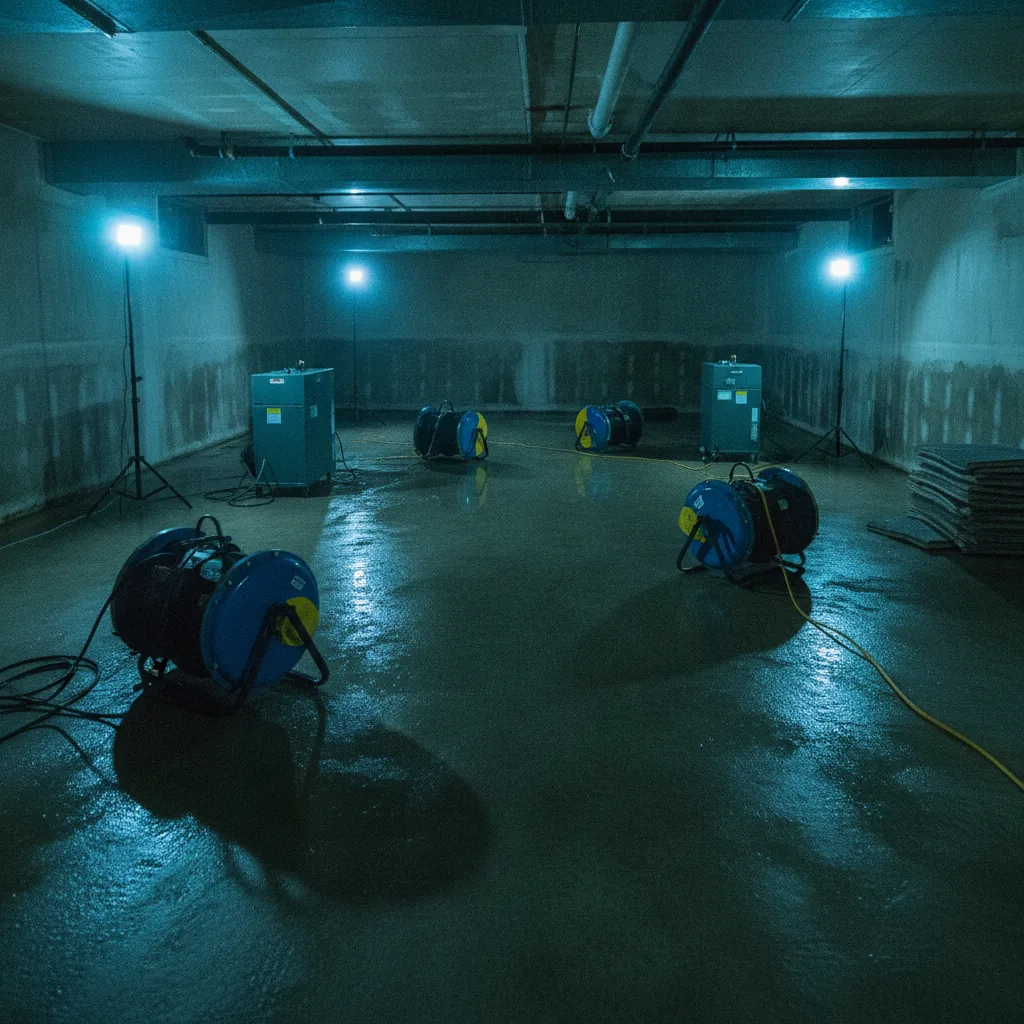
Walking downstairs to find water across the basement floor is one of the most stressful things a homeowner can face. Whether it is an inch of water seeping in along the foundation after a spring storm or a few feet from a failed pump or broken line, the next few hours matter more than most people realize. Water keeps moving into drywall, carpet pad, framing, and stored belongings, and every hour it sits makes cleanup larger.
This guide walks through what to do first, how professional basement flood cleanup works, what is usually salvageable, and how to think about insurance documentation. It is written for homeowners and property managers across Central Kentucky, including Lexington, Richmond, Nicholasville, Georgetown, Winchester, Paris, Frankfort, and Bardstown.
Why Basements in Central Kentucky Flood
Basements sit below grade, so they are the natural low point for any water that enters a home. In our region, the common causes include:
- Heavy rain and saturated soil. Long spring and early-summer rain events push groundwater against foundation walls and up through floor cracks.
- Sump pump failure. A pump that loses power, burns out, or cannot keep up can let a basement fill quickly. (See our related read, Sump Pump Failure Flood Cleanup.)
- Plumbing failures. Supply lines, water heaters, and washing machine hoses are often located in the basement, and a burst pipe can release a large volume of water fast.
- Sewer or drain backups. Floor drains can back up during heavy storms, bringing contaminated water into the space.
- Freeze-thaw damage. Kentucky winters swing above and below freezing, which stresses exposed pipes in unfinished basements.
The source of the water matters, because it determines how the water is classified and what has to be removed. Our related read, Category 1 vs 2 vs 3 Water Damage Explained, covers that in detail.
What to Do First When Your Basement Is Flooding
Safety comes before saving anything:
- Stay out of standing water if outlets, cords, appliances, or the electrical panel could be in contact with it. If you cannot reach your breaker panel safely from a dry location, wait for a professional or your utility.
- Stop the source if you can do it safely. For a plumbing leak, close the main water shutoff. For a sump issue, check whether the pump has power.
- Assume the water may be contaminated if it came from outside, a floor drain, or a sewer line. Keep children and pets away.
- Take photos and video of the water level, affected rooms, and damaged items before anything is moved. This helps with any insurance claim later.
- Move what you safely can to a dry floor, especially documents, photos, and electronics.
- Call for professional help. Flood Busterz is available 24/7 at (859) 408-9611.
For a fuller checklist, see What to Do in the First Hour After Water Damage.
How Professional Basement Flood Cleanup Works
Basement cleanup is more than pumping out water. A thorough job generally follows these stages.
Inspection and moisture assessment
The crew identifies the water source, the likely water category, and how far moisture has traveled. Moisture meters and thermal tools help find wet areas behind walls and under flooring that look dry on the surface.
Water extraction
Truck-mounted or portable extraction equipment removes standing water and pulls water out of carpet and pad. The faster bulk water comes out, the less it wicks up drywall and into wood framing.
Removal of unsalvageable materials
Depending on the water category and how long materials were wet, some items need to come out: saturated carpet pad, the lower portion of drywall, wet insulation, and swollen particleboard furniture or cabinets. Removing these lets the structure behind them dry properly.
Structural drying
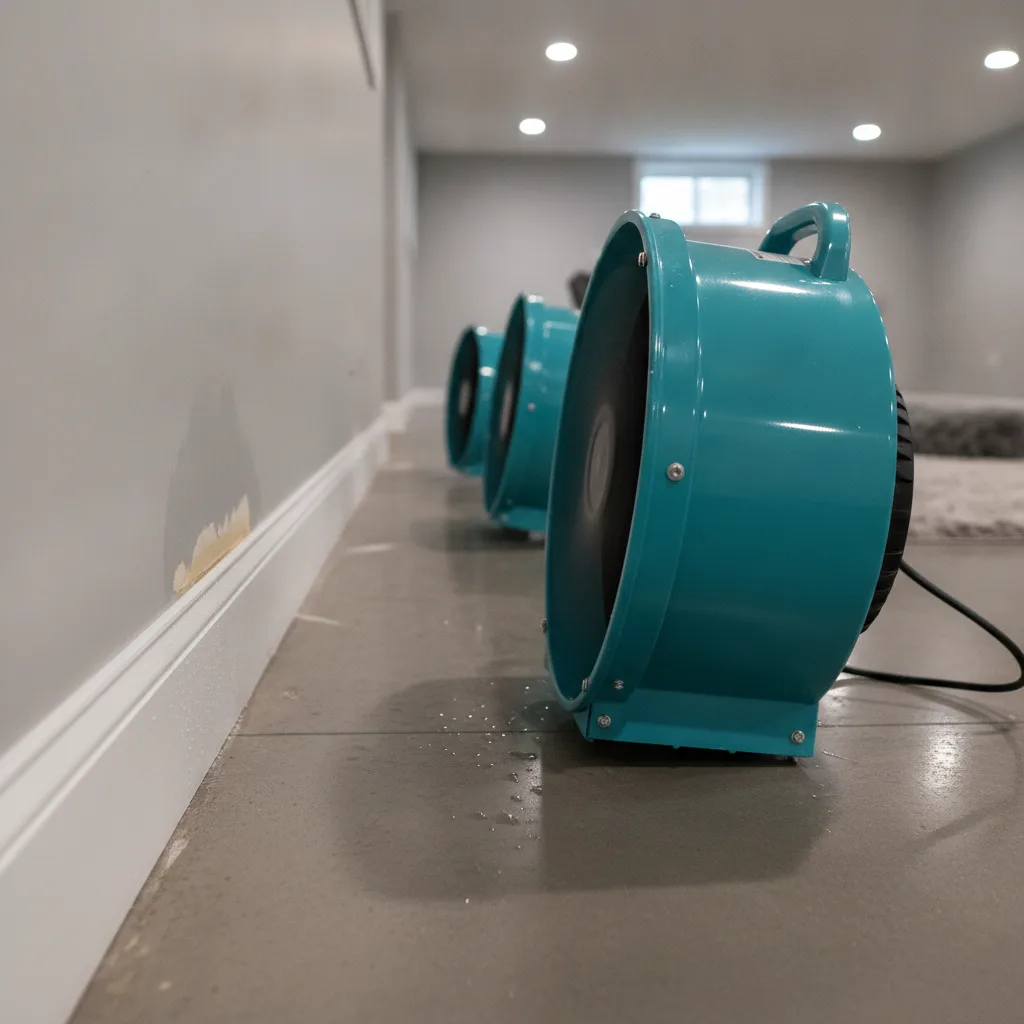
Commercial dehumidifiers and air movers are set up and adjusted based on readings. Basements are often cooler and more humid than the rest of the house, so drying has to be managed carefully, especially during humid Kentucky summers.
Monitoring and documentation
Moisture readings are taken over the drying period until materials reach acceptable levels. These records support your insurance claim and confirm that the space is truly dry before rebuild.
Contents and cleanup
Salvageable belongings can be cleaned, dried, and returned. Flood Busterz offers content restoration as well as water extraction, flood cleanup, sewage cleanup, and structural drying.
Finished vs Unfinished Basements
An unfinished basement with a concrete floor and block walls is often simpler to dry, though stored items and exposed framing still need attention. A finished basement adds carpet, pad, drywall, baseboards, insulation, and sometimes a drop ceiling, all of which absorb water. Finished spaces usually need more controlled removal, such as cutting drywall a couple of feet above the waterline, so hidden cavities can dry. Skipping that step is a common reason musty odors return weeks later.
What Can Be Saved After a Basement Flood?
The honest answer is that it depends on the water category, how long items were wet, and what they are made of.
- Carpet: Sometimes salvageable after clean water if extracted quickly. Padding is usually replaced. Carpet exposed to contaminated water is generally discarded.
- Drywall: Often dried in place after a short clean-water event, but commonly cut out when saturated or when the water was contaminated.
- Furniture: Solid wood may be restorable; particleboard and upholstered pieces often are not after prolonged soaking.
- Documents and photos: Can sometimes be stabilized if handled quickly.
Insurance and Documentation
Coverage depends on your policy and the cause of the water. Sudden plumbing failures are treated differently from groundwater or surface flooding, and sewer or sump backup often requires a separate endorsement. Read your policy and talk with your agent. Our related read, Does Kentucky Homeowners Insurance Cover Water Damage?, explains the general concepts. Flood Busterz provides insurance assistance, including photos and drying records you can share with your carrier.
When to Call a Professional
A shop vac can handle a small puddle on bare concrete. It is time to call a restoration company when water covers a large area, reaches drywall or carpet, came from a drain or the outdoors, or when you are not sure the space is electrically safe. Flood Busterz is licensed and insured, answers calls 24/7, and offers free estimates across Central Kentucky. Call (859) 408-9611 to talk through what you are seeing.
Questions people ask
Straight answers for Central Kentucky homeowners dealing with water damage.
What should I do first if my basement is flooding?+
Make sure the area is electrically safe before you step into the water. If you can reach the breaker panel from a dry spot, shut off power to the basement. Then stop the source if possible, such as closing the main water valve. Photograph the damage, move valuables you can safely reach, and call a restoration company to begin extraction quickly.
How fast can a crew extract standing water from a basement?+
Once a crew arrives, extraction of standing water often begins right away and many basements can be cleared of bulk water within hours, depending on depth, square footage, and access. Drying the structure takes longer. Flood Busterz responds 24/7 across Central Kentucky, so you do not have to wait until morning for extraction to start.
Will carpet, drywall, and furniture in a flooded basement be salvageable?+
Some may be. Clean-water losses caught early give the best chance of saving carpet and drying drywall in place, though padding is usually replaced. Contaminated water from drains or outdoor flooding generally means porous materials must be removed. Solid wood furniture may be restored, while particleboard often swells beyond repair. An on-site inspection determines what can stay.
Does homeowners insurance cover a flooded basement?+
It depends on your policy and the cause. Sudden, accidental plumbing failures are often treated differently from surface flooding or groundwater, which standard policies commonly exclude. Sewer and sump backups frequently require a separate endorsement. Read your policy and ask your agent. Flood Busterz can help by documenting the damage and drying process for your claim.
How long does basement drying take after extraction?+
Many basements need several days of drying with commercial dehumidifiers and air movers, but the timeline varies with the amount of water, the materials involved, and the weather. Humid Kentucky summers can slow drying. A professional crew checks moisture readings during the process and removes equipment only when materials reach acceptable dry levels.
Water in your home right now?
Licensed & insured water damage restoration across Lexington, Richmond, Nicholasville, and Central Kentucky. Extraction, drying, and restoration, day or night.