
Burst Pipe Water Damage Restoration
Burst pipe in your Lexington-area home? Learn what to shut off first, how mitigation and drying work, when drywall comes out, and how Flood Busterz helps 24/7.
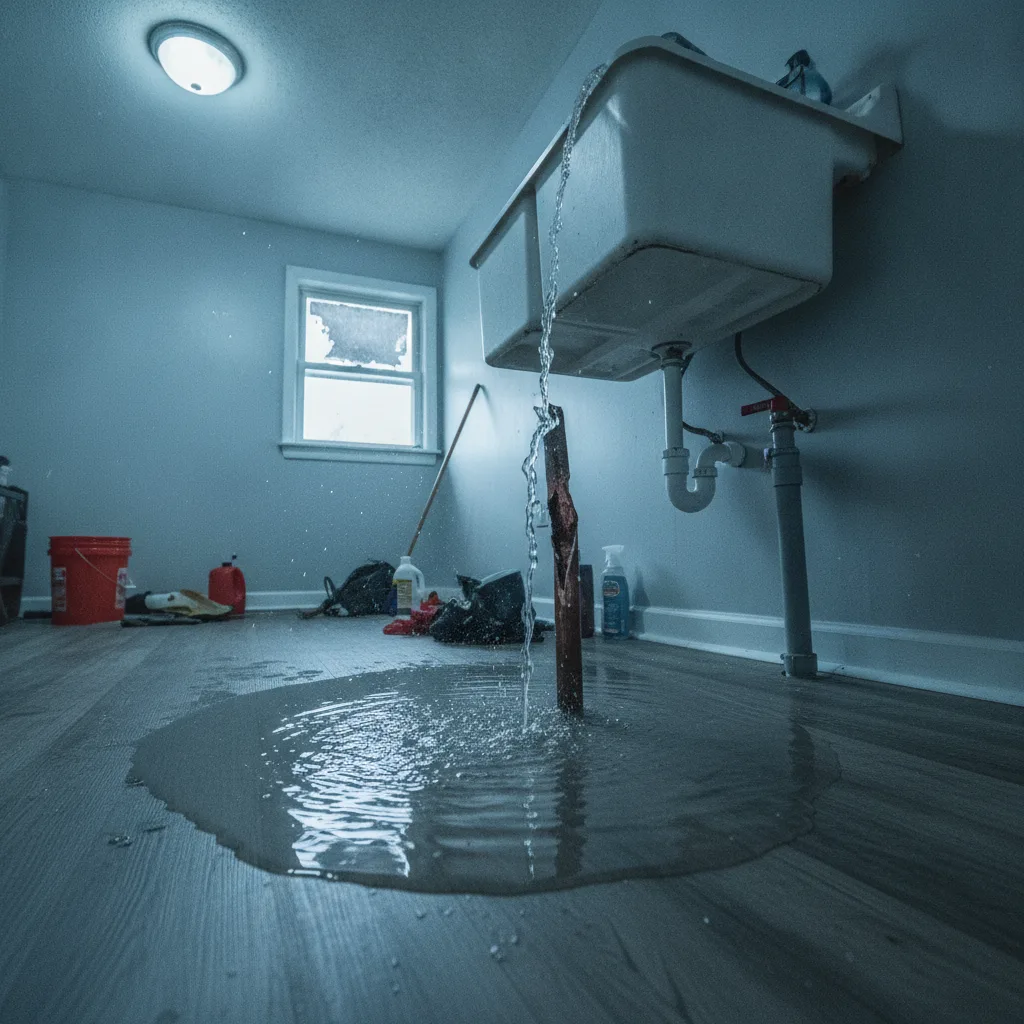
A burst pipe does not leak politely. A pressurized supply line can push out water continuously until someone closes a valve, and that water spreads across floors, soaks into walls, and drips through ceilings to the level below. Because supply-line water starts out clean, fast action can often keep the damage limited. Wait too long, and a contained repair becomes a much bigger project.
This page explains what to do the moment a pipe bursts, what professional mitigation includes, when materials have to be removed, and how to document the loss for your insurance carrier. It is written for homeowners and property managers in Lexington and across Central Kentucky, including Richmond, Nicholasville, Georgetown, Winchester, Paris, Frankfort, and Bardstown.
Why Pipes Burst in Central Kentucky Homes
Kentucky winters bring repeated swings above and below freezing. When water freezes inside a pipe, it expands and builds pressure, often splitting the pipe somewhere away from the ice itself. Pipes in exterior walls, crawl spaces, garages, attics, and unheated basements are most vulnerable. Many freeze breaks are not discovered until the ice thaws and water starts flowing again.
Pipes also fail for reasons unrelated to cold: aging fittings, corrosion, high water pressure, loose connections on supply lines to toilets and sinks, and worn washing machine hoses. Whatever the cause, the response is the same.
What to Shut Off First
- Close the main water shutoff. In many Central Kentucky homes it is in the basement or crawl space near where the line enters the house, in a utility room, or near the water heater. Some homes also have a valve at the meter near the street. Learn where yours is before you ever need it.
- Cut power to affected areas if water is near outlets, fixtures, or the electrical panel, but only if you can reach the breaker panel from a dry location.
- Open a faucet on the lowest level to relieve remaining pressure and drain the lines.
- Turn off the water heater if the system has drained, following the manufacturer’s instructions.
- Photograph everything before cleanup, including the broken pipe if visible.
- Call a restoration company. Flood Busterz answers 24/7 at (859) 408-9611.
You will also need a plumber to repair the pipe itself. Restoration addresses the water damage; plumbing repair fixes the source.
How Much Water Can a Burst Pipe Release?
More than most people expect. Even a modest residential supply line can release hundreds of gallons in an hour while the main stays open. That is why a burst on an upper floor or in a ceiling can affect multiple rooms and levels. Water follows gravity and travels along framing, inside wall cavities, and under flooring, so the visible puddle rarely shows the full extent of the damage.
What Professional Mitigation Includes
Professional burst pipe restoration focuses on stopping the spread and drying the structure correctly.
Moisture mapping
Technicians use moisture meters and thermal tools to trace where water went, including inside walls, under cabinets, beneath flooring, and in ceilings below. This map guides every decision that follows.
Water extraction
Standing water is removed from floors, and carpet is extracted to pull water out of the fibers and pad. Fast extraction is the single biggest factor in limiting damage.
Controlled removal
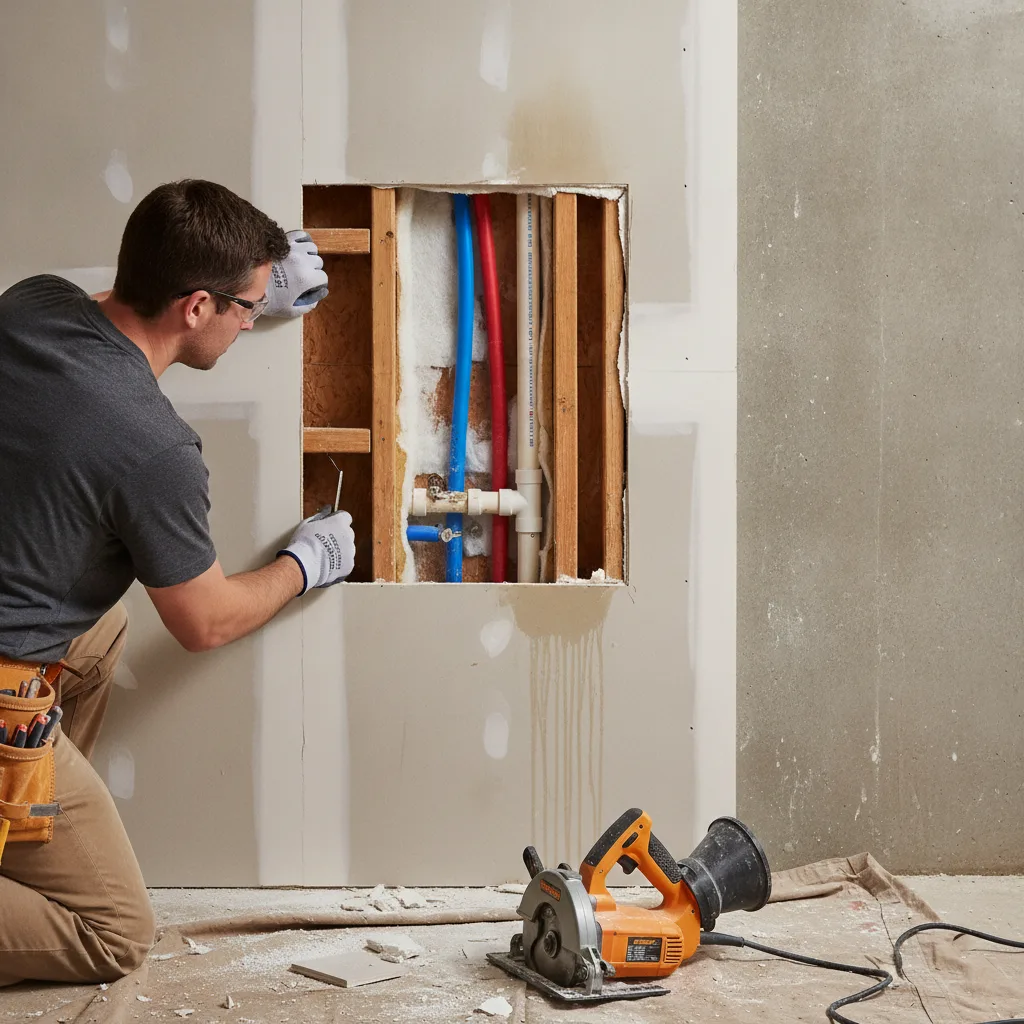
Materials that cannot dry in place, or that trap moisture against the structure, are removed. Common examples include saturated carpet pad, swollen baseboards, wet insulation, and sections of drywall.
Structural drying
Air movers and commercial dehumidifiers are positioned based on the moisture map. Some situations call for drying inside wall cavities or under cabinets. Equipment is adjusted as readings change.
Monitoring and documentation
Moisture readings are recorded over the drying period. This record shows your insurance carrier that the structure was dried to acceptable levels and helps prevent secondary problems such as odors, warping, or mold growth.
When Is Drywall or Flooring Removal Required?
Not every wet wall needs to come out. Drywall exposed briefly to clean supply-line water can often be dried in place with the right equipment. Removal is more likely when drywall is saturated, sagging, or has been wet long enough to lose strength; when insulation behind it is soaked; or when the water has become contaminated. Flooring decisions depend on the material. Carpet pad is usually replaced, laminate often swells, and hardwood may be saved with specialized drying if action is quick. See our related reads, Hardwood Floor Water Damage: Salvage vs Replace and Ceiling and Drywall Water Damage Repair.
Clean Water Does Not Stay Clean Forever
Water from a supply line generally starts as Category 1, or clean water. As it sits, picks up contaminants from flooring and building materials, and warms, it can degrade into a more contaminated category. That change can turn a dry-in-place job into one that requires more removal. Our related read, Category 1 vs 2 vs 3 Water Damage Explained, covers this in more detail.
Insurance and Burst Pipes
Sudden and accidental pipe bursts are commonly addressed by homeowners policies, while long-term, gradual leaks are often excluded. Coverage details vary by policy, so read yours and call your agent. Flood Busterz provides insurance assistance, including photos, moisture records, and drying documentation. For general background, see Does Kentucky Homeowners Insurance Cover Water Damage?
When to Call Flood Busterz
Call when water has reached walls, ceilings, or flooring, when it has traveled to another level, or when you are unsure how far it spread. Flood Busterz is licensed and insured, available 24/7, and offers free estimates for homes and businesses across Central Kentucky. Our services include water extraction, structural drying, and content restoration. Call (859) 408-9611.
Questions people ask
Straight answers for Central Kentucky homeowners dealing with water damage.
What should I shut off first after a burst pipe?+
Shut off the main water valve first to stop the flow. Then, if water is near outlets, fixtures, or appliances and you can reach the breaker panel from a dry spot, turn off power to the affected area. Open a low faucet to drain remaining pressure, photograph the damage, and call a restoration company and a plumber.
How much water can a burst supply line release per hour?+
A burst residential supply line can release hundreds of gallons in an hour while the main valve stays open, depending on pipe size, water pressure, and the size of the break. That is why even a short delay can spread water across several rooms or into the level below. Shutting the main valve quickly is the most important step.
Is sudden pipe-burst damage usually covered by insurance in Kentucky?+
Many homeowners policies address sudden and accidental water discharge, such as a pipe that bursts unexpectedly, while gradual leaks and lack of maintenance are often excluded. Every policy is different, so read your coverage and ask your agent before assuming. Flood Busterz can help by documenting the damage and drying process for your carrier.
What does professional mitigation include after a burst pipe?+
Mitigation usually includes inspecting and mapping moisture, extracting standing water, removing materials that cannot dry in place, setting up air movers and commercial dehumidifiers, and monitoring moisture readings until the structure is dry. Documentation is kept throughout so your insurance carrier can see what was done. Repairs and rebuilding typically follow once drying is complete.
When is drywall or flooring removal required after a pipe burst?+
Removal is usually needed when drywall is saturated, sagging, or soft, when insulation behind it is soaked, or when water has become contaminated. Carpet pad is commonly replaced, and laminate often swells. Drywall and some hardwood briefly exposed to clean water may be dried in place. Moisture readings during inspection guide which materials stay and which go.
Water in your home right now?
Licensed & insured water damage restoration across Lexington, Richmond, Nicholasville, and Central Kentucky. Extraction, drying, and restoration, day or night.