
Hardwood Floor Water Damage Salvage vs Replace
Wet hardwood floors in Lexington or Central Kentucky? Learn when cupped boards can be dried and saved, when to replace them, and how pros dry floors in place.
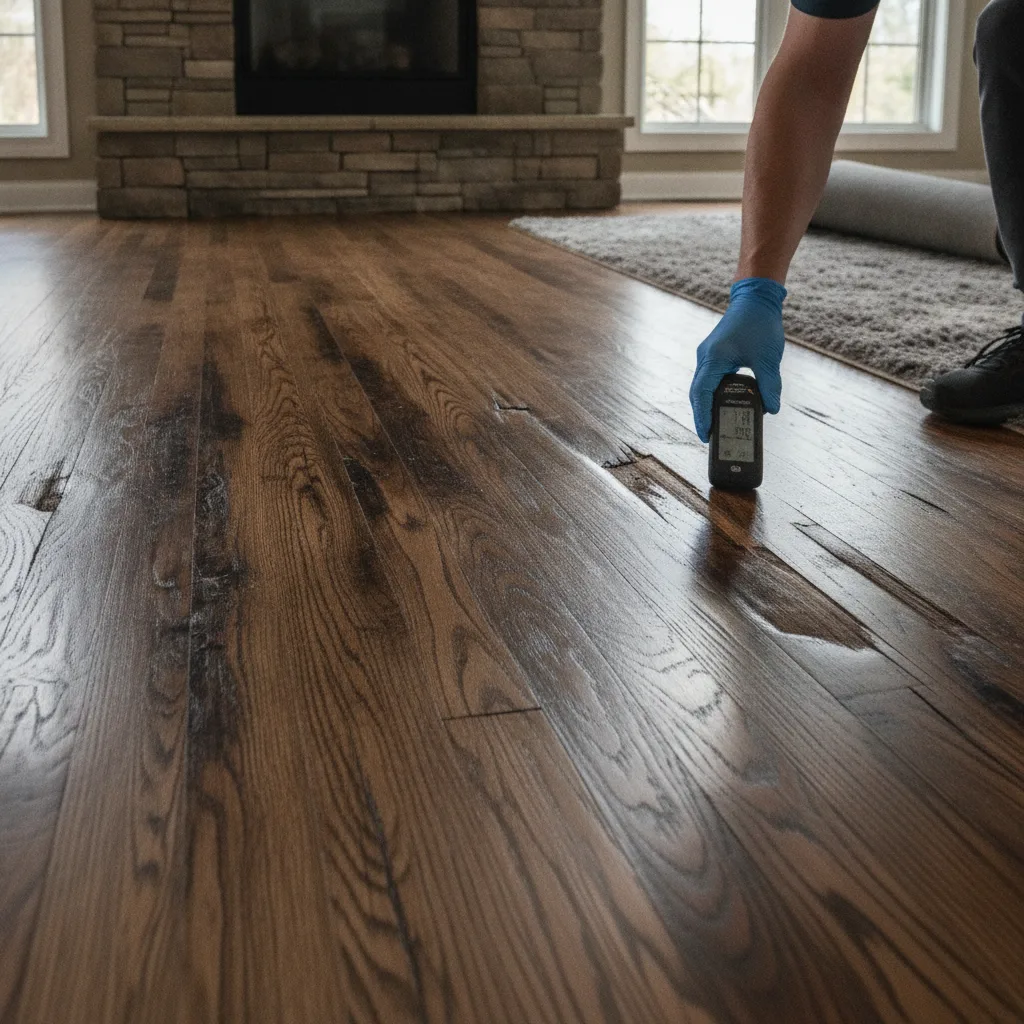
Hardwood floors are one of the most valuable finishes in a home, and one of the most sensitive to water. When a pipe bursts, an appliance leaks, or water comes in from outside, wood absorbs moisture and starts to change shape. Boards cup, crown, gap, or buckle. The natural question is whether the floor can be saved or whether it has to come out.
The answer depends on several factors, and timing is near the top of the list. This guide walks through how water affects hardwood, what professional drying looks like, and how restorers decide between salvage and replacement. It is written for homeowners and property managers in Lexington and across Central Kentucky, including Richmond, Nicholasville, Georgetown, Winchester, Paris, Frankfort, and Bardstown.
How Water Damages Hardwood
Wood is hygroscopic, meaning it absorbs and releases moisture from its surroundings. When water reaches a hardwood floor, it soaks in from the edges, the underside, and the seams. The result shows up in a few predictable ways:
- Cupping. The edges of each board rise higher than the center. This usually means the bottom of the board is wetter than the top.
- Crowning. The center rises higher than the edges. This often happens when a cupped floor is sanded flat before it has fully dried, or when the top surface absorbs more moisture.
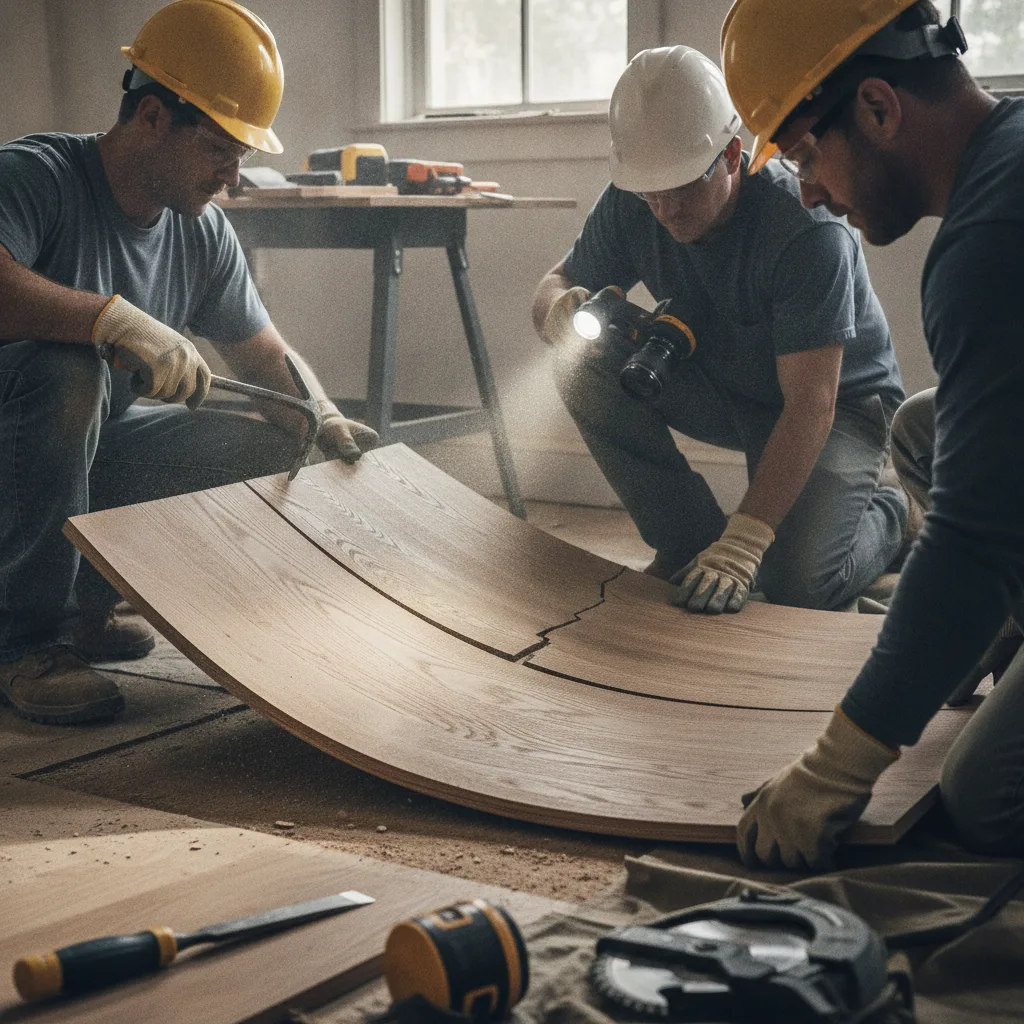
- Buckling. Boards lift off the subfloor entirely as swelling exceeds the available expansion space.
- Gapping and staining. Dark staining, finish damage, and gaps can appear as boards swell and then shrink.
Water under the hardwood matters as much as water on top. Moisture in the subfloor can keep feeding the wood long after the surface looks dry.
How Soon Hardwood Must Be Dried
Speed is the single biggest factor in salvaging a hardwood floor. The sooner standing water is extracted and drying begins, the less moisture the boards and subfloor absorb. Floors that sit wet for a day or more are more likely to suffer permanent distortion, finish failure, and staining, and the risk of mold growth beneath the floor increases.
If you have wet hardwood right now, remove area rugs, wipe up surface water, keep foot traffic off the floor, and call for professional drying. For first steps, see What to Do in the First Hour After Water Damage.
Factors That Decide Salvage vs Replace
Water category
Clean water from a supply line gives the best chance of saving hardwood. Gray water raises concerns about what soaked into the wood. Floors exposed to black water from sewage or outdoor flooding are generally removed because wood is porous and difficult to decontaminate. See Category 1 vs 2 vs 3 Water Damage Explained.
Duration of exposure
Hours versus days makes a major difference. Short exposure followed by fast extraction often leads to good outcomes.
Type of flooring
- Solid hardwood has the best salvage potential because it can usually be dried and later sanded and refinished.
- Engineered hardwood has a thin wood veneer over layered plywood or fiberboard. Its core can delaminate, and the thin top layer limits refinishing.
- Laminate is not real hardwood. It usually has a fiberboard core that swells and does not recover, so it is typically replaced after significant water exposure.
Subfloor condition
If the subfloor is saturated, damaged, or showing signs of decay, boards may need to come up so the subfloor can be dried or replaced.
Installation method
Nail-down, glue-down, and floating floors respond differently. Glue-down floors can lose adhesion, and floating floors can trap water underneath.
How Professionals Dry Hardwood in Place
When salvage is possible, restorers use specialized techniques beyond fans and open windows:
- Extraction. Specialized tools pull water from the surface and seams.
- Moisture mapping. Meters measure moisture in the boards and subfloor and compare readings with unaffected areas of the same floor.
- Floor drying systems. Mats or panels placed on the floor draw moisture up and out of the wood under negative pressure.
- Dehumidification and air movement. Commercial dehumidifiers lower humidity in the room so wood can release moisture steadily.
- Monitoring. Readings are tracked until the floor approaches normal moisture levels.
Patience matters. Wood that dries too fast can crack or check, and wood that is sanded before it is fully dry can crown later. Flood Busterz provides structural drying, and hardwood floors are one of the materials that benefit most from careful, monitored drying.
What Happens After Drying
Once the floor reaches acceptable moisture levels, it is reassessed. Mild cupping sometimes relaxes on its own as the wood stabilizes. Floors that remain distorted may be sanded and refinished. Boards that are cracked, delaminated, badly stained, or buckled are replaced, sometimes selectively. If too much of the floor is damaged, full replacement may be the practical option.
When Replacement Is the Right Call
Replacement is usually recommended when:
- The floor was exposed to contaminated water.
- Boards are buckled, split, or delaminated.
- The subfloor is damaged or decayed.
- Laminate or thin engineered flooring has swollen.
- Moisture remained for an extended period and staining or mold is present.
Central Kentucky Considerations
Seasonal humidity swings in Central Kentucky make hardwood naturally expand and contract during the year. After water damage, that seasonal movement can complicate drying. Floors above basements and crawl spaces are also affected by moisture below. See Crawl Space Water Damage and Drying for related issues.
When to Call Flood Busterz
If your hardwood is wet, cupping, or buckling, call before you sand or replace anything. Flood Busterz is licensed and insured, available 24/7, offers free estimates, and provides insurance assistance across Central Kentucky. Call (859) 408-9611.
Questions people ask
Straight answers for Central Kentucky homeowners dealing with water damage.
Can cupped hardwood floors be dried and saved?+
Often, yes, if the water was clean and drying began quickly. Professional drying lowers moisture in the boards and subfloor, and mild cupping may flatten as the wood stabilizes. Remaining distortion can sometimes be sanded and refinished once the floor is fully dry. Sanding too early can cause crowning, so moisture readings should guide when refinishing happens.
How soon must hardwood be dried after water exposure?+
As soon as possible. The longer water sits, the more the boards and subfloor absorb, which increases the risk of permanent cupping, staining, finish damage, and mold beneath the floor. Floors left wet for a day or more are harder to save. Remove rugs, wipe up surface water, and arrange professional drying right away.
When must hardwood boards or subfloor be replaced?+
Replacement is usually needed when boards are buckled, split, delaminated, or badly stained, when the floor was exposed to contaminated water, or when the subfloor is damaged or decayed. Floors that stayed wet for an extended period may also need to go. A moisture assessment and inspection after drying help decide whether selective or full replacement is appropriate.
Does laminate fail differently than solid hardwood?+
Yes. Laminate typically has a fiberboard core that swells when wet and does not return to its original shape, so it is usually replaced after significant water exposure. Solid hardwood can often be dried and refinished. Engineered hardwood falls in between; its layered core can delaminate, and the thin wood veneer limits how much it can be sanded.
What equipment is used to dry hardwood floors in place?+
Restorers use extraction tools to pull water from the surface and seams, moisture meters to map wet areas, floor drying mats or panels that draw moisture out of the wood, and commercial dehumidifiers and air movers to control the room's humidity. Readings are checked over the drying period until the wood approaches normal moisture levels for that floor.
Water in your home right now?
Licensed & insured water damage restoration across Lexington, Richmond, Nicholasville, and Central Kentucky. Extraction, drying, and restoration, day or night.